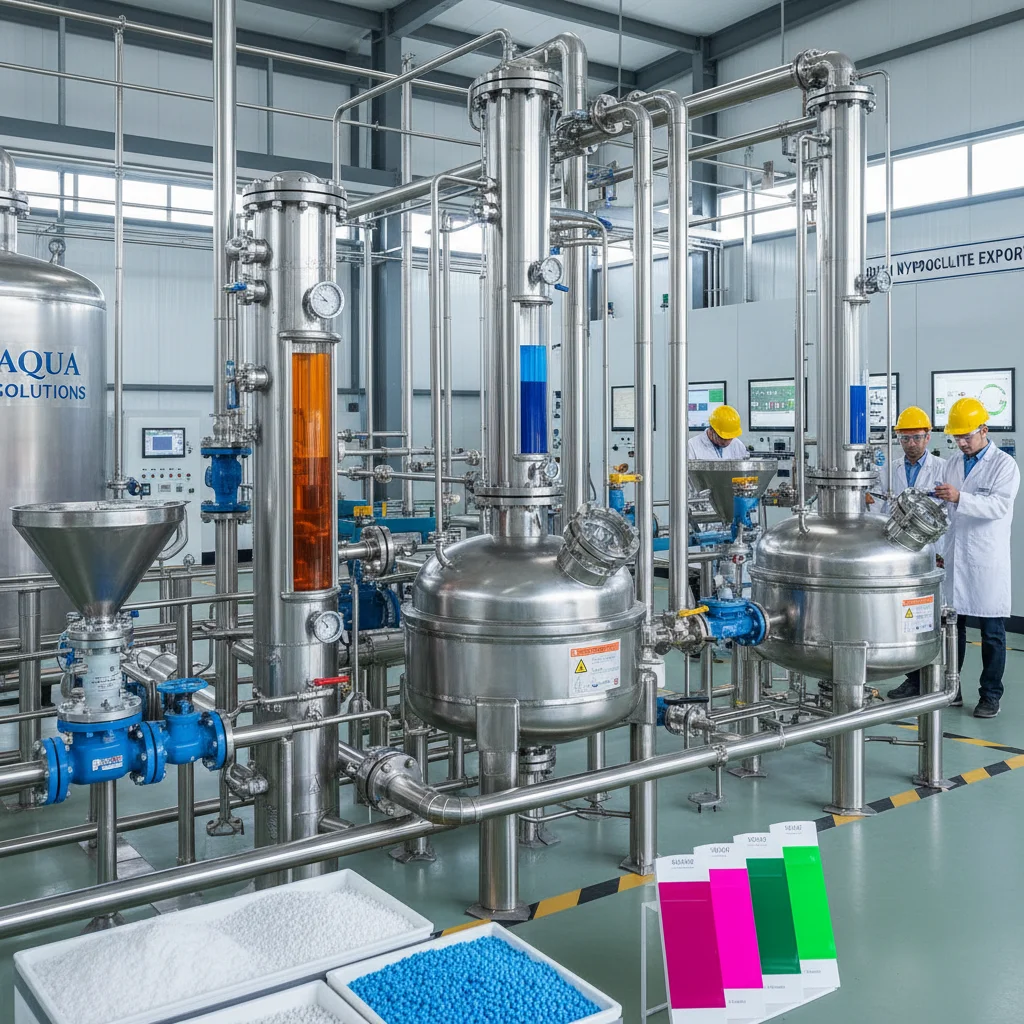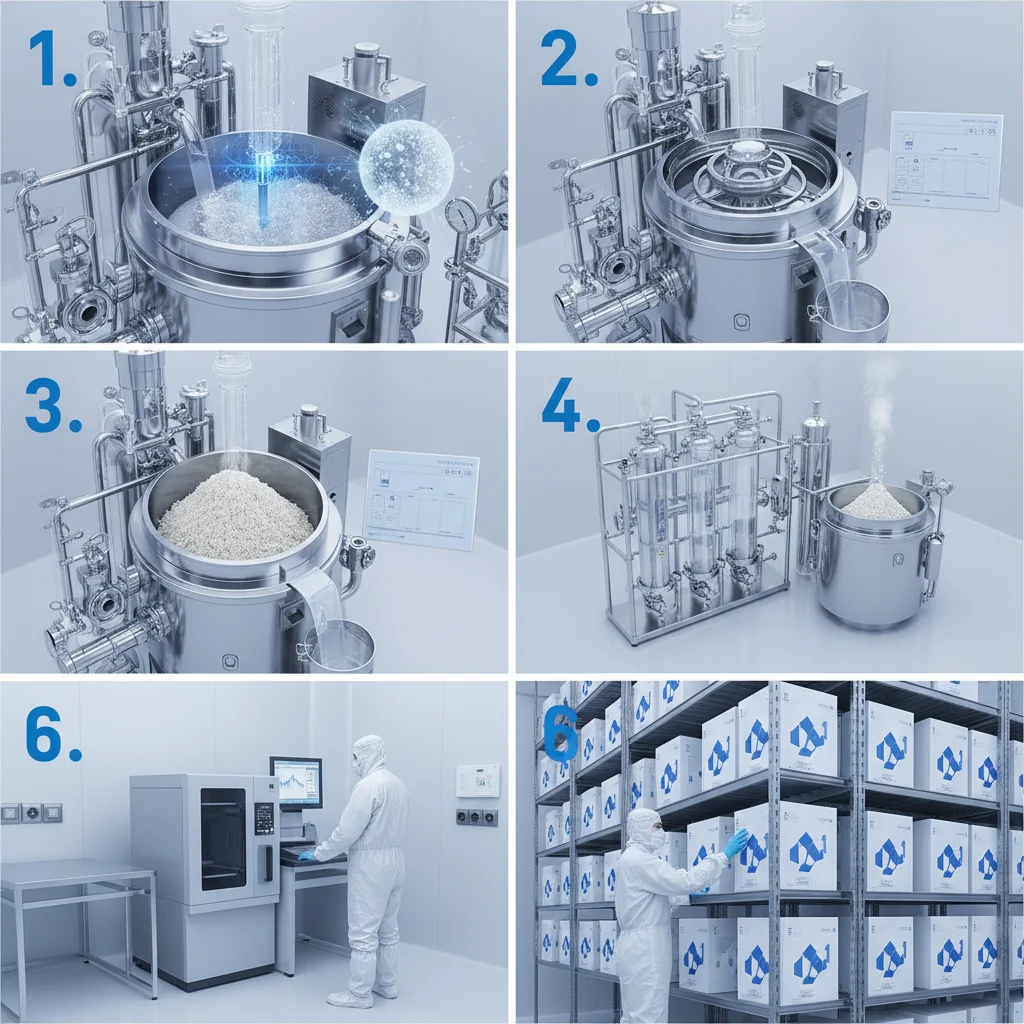
Selecting a reliable Dichloro 5 5 DimethylHydantoin manufacturer involves more than just comparing price lists; it requires a deep dive into the stability of the halogen release and the purity of the chemical precursors. In the stringent landscape of pharmaceutical and industrial water treatment, the consistency of DCDMH impacts everything from API yield to the longevity of cooling systems.
As industries shift toward more sustainable and high-efficiency sterilization agents, the demand for precision-engineered hydantoin derivatives has surged. The challenge for procurement officers lies in identifying a source that can balance large-scale industrial capacity with the rigorous quality control required for pharmaceutical-grade intermediates.
This analysis explores the technical benchmarks for evaluating DCDMH production, the critical role of hydantoin chemistry in modern synthesis, and how to vet a manufacturer for long-term supply chain security in the fine chemicals sector.

The Chemistry of DCDMH and its Industrial Significance

Dichloro 5,5-dimethylhydantoin (DCDMH) is a halogenated organic compound that serves as a powerful oxidizing agent and a versatile building block in organic synthesis. Unlike simple inorganic bleaches, DCDMH provides a controlled release of active chlorine, making it indispensable for applications where aggressive oxidation would damage equipment or degrade sensitive organic substrates.
For a professional manufacturer, the synthesis of DCDMH involves the precise chlorination of 5,5-dimethylhydantoin. The process must be meticulously controlled to ensure that the chlorine atoms are positioned correctly on the nitrogen atoms of the hydantoin ring, as any deviation leads to instability and reduced biocidal efficacy.
In the broader context of the fine chemicals industry, DCDMH is more than just a disinfectant; it is a strategic intermediate. Its ability to act as a chlorinating agent in the synthesis of complex pharmaceuticals allows chemists to introduce chlorine into specific molecular positions with high selectivity, reducing waste and improving overall reaction yields.
Critical Quality Indicators for High-Purity Hydantoin Derivatives
The value of DCDMH is fundamentally tied to its available chlorine content and its physical stability. When auditing a manufacturer, the primary focus should be on the active ingredient percentage and the presence of residual inorganic salts, which can catalyze premature decomposition during storage.
Another critical indicator is the particle size distribution and morphology. For industrial water treatment, a consistent crystalline structure ensures a predictable dissolution rate, preventing "spikes" in chlorine concentration that could lead to corrosion in cooling towers or irritation in swimming pool environments.
Furthermore, moisture content must be kept to an absolute minimum. Since DCDMH is sensitive to hydrolysis, any residual water within the product can trigger the slow release of hypochlorous acid, leading to pressure build-up in packaging and a significant drop in active chlorine levels before the product even reaches the end-user.
Diverse Applications from Water Treatment to API Synthesis
The versatility of DCDMH allows it to bridge the gap between heavy industrial water treatment and high-precision pharmaceutical manufacturing. In the realm of leisure water treatment, it is utilized in pools and spas for its ability to maintain sanitary conditions without the pungent odor associated with traditional liquid chlorine.
In industrial cooling systems, DCDMH acts as a potent algicide and slimicide. By inhibiting the growth of biofilms on heat exchanger surfaces, it directly improves the thermal efficiency of the plant, reducing energy consumption and preventing microbial-induced corrosion (MIC) in carbon steel piping.
Beyond sterilization, its role as a pharmaceutical intermediate is pivotal. It is often employed in the synthesis of active pharmaceutical ingredients (APIs) where a stable, manageable source of chlorine is required. This is particularly evident in the production of specific antifungal agents and antiretroviral drugs, where structural precision is mandatory for biological efficacy.
Comparing Production Efficiency and Chemical Stability Metrics
When analyzing the performance of DCDMH, the industry typically measures efficacy based on active chlorine release, stability under thermal stress, and solubility rates. High-tier manufacturers utilize advanced crystallization techniques to ensure that the chemical potential of the product remains constant across different batches.
The following data represents the relative performance of premium-grade DCDMH compared to standard industrial grades across five critical operational dimensions. These metrics highlight how purity and process control translate into real-world reliability.
Dichloro 5 5 DimethylHydantoin manufacturer Performance Metrics
As illustrated, the premium grade exhibits significantly higher stability and a more controlled dissolution rate. This prevents the "shock" effect often seen with lower-grade products, allowing for a more sustainable chemical equilibrium in water treatment systems and more predictable kinetics in pharmaceutical reactors.
Procurement Strategies for Global Chemical Supply Chains
Sourcing DCDMH on a global scale requires a strategy that prioritizes compliance and logistical security. Because halogenated compounds can be sensitive to temperature and humidity during transit, the choice of packaging is as important as the chemical purity itself.
Procurement officers should demand comprehensive Certificates of Analysis (CoA) for every batch, specifically looking for the "Available Chlorine" assay and moisture content. A manufacturer that provides detailed batch-to-batch variance data is far more reliable than one that only provides a general product specification sheet.
Additionally, evaluating the manufacturer's EHS (Environment, Health, and Safety) record is critical. The production of chlorinated hydantoins involves hazardous reagents; a facility with a strong safety record is less likely to suffer unplanned shutdowns, ensuring a steady supply of raw materials for the buyer's production line.
Future Trends in Halogenated Hydantoin Manufacturing
The future of DCDMH production is leaning heavily toward "Green Chemistry" and the reduction of chlorinated waste. We are likely to see a shift toward closed-loop chlorination processes that recapture byproduct gases, thereby reducing the environmental footprint of the manufacturing plant.
Automation in crystallization is another key trend. By using AI-driven sensors to monitor the growth of DCDMH crystals in real-time, manufacturers can achieve an almost perfect uniformity in particle size. This will allow for the development of "smart-release" tablets that can maintain a precise chlorine level for weeks without manual intervention.
Furthermore, as the pharmaceutical industry moves toward more complex biologics, there is a growing need for ultra-pure intermediates. This is expected to drive a demand for "API-grade" DCDMH, where impurities are measured in parts per million (ppm) rather than percentages, pushing the boundaries of current purification technologies.
Vendor Evaluation Matrix for DCDMH Sourcing
To objectively compare different suppliers of Dichloro 5,5-dimethylhydantoin, procurement teams should use a weighted matrix. This approach removes the bias of price and focuses on the total cost of ownership, including the costs of failed batches or system corrosion caused by impurities.
The following table outlines the key differentiation factors between various manufacturing tiers, from basic industrial suppliers to high-specialization chemical houses.
| Supplier Tier | Purity Focus | Primary Use Case | Logistics Standard |
|---|---|---|---|
| Basic Industrial | Standard Grade | General Disinfection | Standard Fiber Drums |
| Water Specialist | Biocidal Activity | Cooling Towers/Pools | Moisture-Resistant Bags |
| Fine Chem House | Intermediate Grade | Agrochemical Synthesis | Double-Layered Foil |
| Pharma-Grade | Ultra-High Purity | API Manufacturing | Vacuum-Sealed Aluminum |
| Custom Synth | Specified Isotopes | R&D Lab Scale | Controlled Temp Transit |
| Integrated Group | Process Consistency | Global Supply Chain | Digital Tracking/IoT |
By aligning the supplier tier with the specific application—whether it be for bulk water treatment or precision medicine—companies can optimize their ROI while minimizing the operational risks associated with chemical variability.
Frequently Asked Questions
Conclusion
The selection of a Dichloro 5,5-dimethylhydantoin manufacturer is a strategic decision that impacts both the operational efficiency of water systems and the purity of pharmaceutical outputs. By shifting the focus from initial cost to total stability and purity metrics, companies can ensure a more resilient production cycle.
For organizations evaluating their current sourcing of hydantoin derivatives or seeking a partner capable of pharmaceutical-grade precision, comprehensive technical data and compliance records are the only reliable benchmarks. Further information on high-purity chemical intermediates and professional manufacturing standards can be reviewed via www.leache-chem.com.