Email:
info@leachechem.com

Maintaining microbial stability in industrial water systems often presents a conflict between rapid disinfection and long-term efficacy. Traditional halogen treatments frequently suffer from high volatility or inconsistent release rates, leading to increased labor costs and potential gaps in sanitation.
The shift toward synergistic halogen compounds has addressed these limitations by combining the oxidative strengths of different elements. In particular, the integration of bromine and chlorine within a single molecular structure allows for a slow-release mechanism that maintains a steady state of disinfection across diverse pH levels.
For organizations seeking a reliable Dibromo 5 5 Dimethyl Hydantoin supplier, understanding the technical nuances of these compounds is essential for optimizing total cost of ownership and ensuring regulatory compliance in water management.


Hydantoin derivatives have transitioned from simple chemical intermediates to sophisticated water treatment agents. The development of 5,5-dimethylhydantoin provided a stable organic backbone that allows for the attachment of active halogens, creating a delivery system that is far more controlled than liquid bleach or gaseous chlorine.
This evolution has been driven by the need for "slow-release" technology. By anchoring halogens to the hydantoin ring, the chemicals dissociate gradually, providing a consistent concentration of active biocides. This reduces the "spike and dip" cycle common in traditional dosing, thereby protecting infrastructure from corrosion while maintaining a sterile environment.
The efficacy of 1-Bromo-3-Chloro-5,5-Dimethylhydantoin (BCDMH) lies in its dual-halogen composition. While chlorine is a powerful oxidant, its effectiveness drops significantly as pH levels rise. Bromine, conversely, remains highly active in alkaline environments and is more effective at penetrating biofilms—the protective slime layers that bacteria use to resist disinfection.
When these two halogens are combined, they create a synergistic effect. The chlorine helps maintain the oxidation potential of the water, while the bromine ensures that microbial control remains robust even in challenging conditions. This makes BCDMH an ideal solution for systems where pH fluctuations are common or where biological fouling is a persistent risk.
Furthermore, the dissolution rate is engineered to be slow and steady. This stability is critical for unmanned dosing systems in industrial cooling towers or remote spa facilities, where manual adjustments are impractical. The result is a predictable chemical profile that ensures water clarity and safety without excessive chemical waste.
In the realm of fine chemicals, purity is not merely a quality metric but a functional requirement. For halogen-based disinfectants, impurities can lead to unpredictable dissolution rates and the formation of unwanted by-products that may affect water turbidity or irritate skin in recreational settings.
A purity level exceeding 99% is the benchmark for professional-grade BCDMH, ensuring that the active halogen content remains between 55-60% for maximum biocidal impact and minimal residual waste.
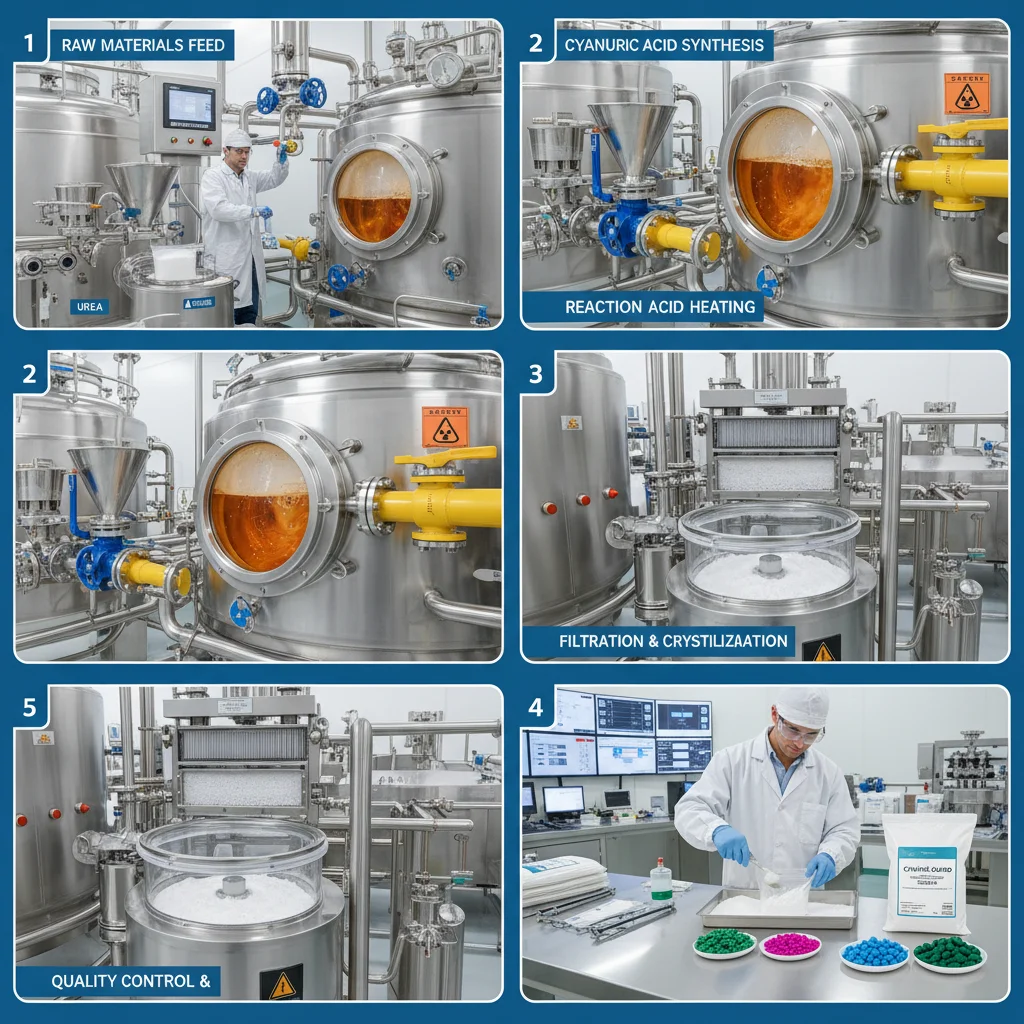
Leache Chem Co., Ltd. utilizes rigorous batch testing and industrial-scale production capabilities to maintain these standards. By ensuring high purity, the compound remains stable in moisture-resistant and UV-stabilized packaging, preventing premature degradation and ensuring that the product delivered to the site performs identically to the laboratory sample.
When comparing the total cost of ownership (TCO) between standard chlorine and BCDMH solutions, the initial price per kilogram is often overshadowed by operational savings. The primary driver of these savings is the dosing frequency; BCDMH's slow-release mechanism significantly reduces the man-hours required for chemical replenishment.
Additionally, the stability of BCDMH under UV exposure and heat reduces the volatility seen with liquid chlorine, meaning more of the active ingredient stays in the water rather than evaporating into the atmosphere. This results in a higher return on investment through improved microbial control and lower labor overhead.
The deployment of BCDMH varies significantly depending on the aquatic environment. In swimming pools and spas, the focus is on user comfort and water clarity; here, the compound's ability to prevent turbidity and operate across a pH range of 6.5 to 8.5 minimizes the need for constant pH correction. In contrast, industrial cooling towers prioritize the elimination of biofilms and algae that can impede heat exchange efficiency and lead to equipment failure.
In aquaculture and wastewater treatment, the priority shifts toward safety and compliance. BCDMH's adherence to NSF/ANSI 60 standards ensures it is safe for treated potable water and recreational facilities. By implementing automated dosing, facility managers can maintain a precise concentration of active halogens, reducing chemical waste and ensuring a hygienic environment without the risks associated with manual handling of concentrated acids or gases.
The water treatment industry is moving toward "green" chemistry—solutions that maximize efficacy while minimizing environmental footprints. The trend is shifting away from volatile, high-emission liquid chemicals toward stabilized, solid-state compounds that reduce shipping weights and eliminate the danger of hazardous spills.
Digital integration is another key driver. We are seeing the rise of smart dosing systems that use real-time sensors to adjust the feed rate of BCDMH based on current microbial load and flow rates. This precision prevents over-treatment and extends the lifespan of the chemical supply, aligning industrial operations with sustainability goals.
Moreover, there is an increasing demand for multi-functional agents. Future developments in the hydantoin series are likely to focus on compounds that not only disinfect but also act as scale inhibitors or algae suppressants, further simplifying the chemical cocktail required for complex industrial water systems.
Selecting a Dibromo 5 5 Dimethyl Hydantoin supplier requires a framework that goes beyond price. Procurement managers must evaluate the supplier's ability to provide consistent purity, as a variance of even 1% in active halogen content can disrupt the calibration of automated dosing systems.
Compliance documentation is equally critical. In regulated environments, the absence of ISO 9001 or NSF/ANSI 60 certifications can lead to audit failures and operational shutdowns. A professional supplier should provide full transparency regarding batch testing and stability monitoring to ensure the product remains effective from the warehouse to the water system.
Finally, technical support and supply chain flexibility are the final pieces of the puzzle. The ability to customize packaging for large-scale industrial needs and provide 24/7 integration support for wastewater systems separates a simple commodity vendor from a strategic technical partner.
| Evaluation Factor | Standard Grade | Premium Grade (BCDMH) | Impact on Operation |
|---|---|---|---|
| Purity Level | < 95% | ≥ 99% | Dosing Accuracy |
| Active Halogen | Variable | 55-60% | Biocidal Strength |
| Release Rate | Rapid/Volatile | Slow/Controlled | Labor Costs |
| pH Range | Narrow (Acidic) | Broad (6.5 - 8.5) | Chemical Stability |
| Compliance | Basic ISO | ISO / NSF/ANSI 60 | Regulatory Risk |
| Packaging | Standard Poly | UV-Stabilized | Shelf Life |
Unlike traditional chlorine tablets that can degrade quickly under UV light or heat, BCDMH combines both bromine and chlorine in a stabilized organic structure. This allows for a much slower and more consistent release of active halogens. Consequently, it maintains a more stable residual concentration in the water, reducing the need for daily dosing and preventing the "chlorine smell" often associated with volatile treatments.
Yes, when sourced from a compliant manufacturer, BCDMH is safe for potable water. Our product complies with NSF/ANSI 60 standards, which is the global benchmark for chemicals used in drinking water treatment. This ensures that the compound provides necessary disinfection without introducing harmful contaminants, making it suitable for municipal water treatment and recreational facilities.
BCDMH is highly versatile and effective across a pH range of 6.5 to 8.5. This is a significant advantage over standard chlorine, which loses a large portion of its efficacy once the pH rises above 7.5. This broad range means that users can maintain high disinfection levels without having to constantly add pH-lowering acids, reducing overall chemical consumption and improving safety.
Absolutely. Due to its high purity (≥ 99%) and consistent dissolution rate, BCDMH is ideal for automated dosing. Its white crystalline powder form prevents clogging in feeder systems, and its predictable release profile allows software-controlled pumps to maintain exact chemical levels. This integration minimizes human error and maximizes the return on investment for large-scale industrial plants.
To maintain the active halogen content of 55-60%, the product must be stored in its original moisture-resistant and UV-stabilized containers. It should be kept in a cool, dry, and well-ventilated area, far away from incompatible chemicals such as strong acids or flammable materials. Proper storage prevents the premature release of halogens and ensures the product remains potent until the moment of application.
Industrial cooling towers, wastewater treatment plants, and aquaculture systems benefit most. In these environments, biofilm control is the primary challenge. Because bromine is more effective at penetrating these biological layers than chlorine alone, BCDMH prevents the scaling and fouling that otherwise reduces heat transfer efficiency and damages piping, leading to lower maintenance costs and longer equipment life.
The transition toward high-purity, slow-release halogen compounds represents a critical step in the modernization of water treatment. By leveraging the synergy of bromine and chlorine, facility managers can achieve a level of microbial control that is both more sustainable and more cost-effective than traditional methods.
Whether managing a commercial cooling tower or a municipal recreational facility, the choice of a supplier depends on the balance of purity, compliance, and technical support. Investing in a professional-grade solution ensures that water quality remains crystal clear and compliant, providing long-term safety for both infrastructure and end-users.